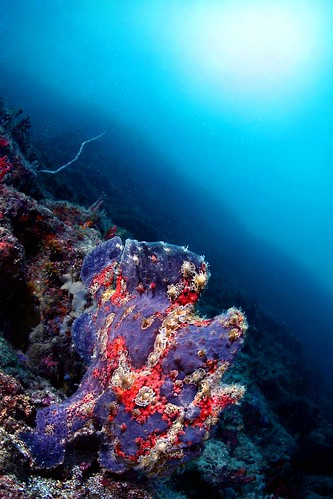
Frogfish are some of the most bizarre looking fish in the ocean. They are a type of angler fish with amazing adaptations for camouflage. Their bodies are oddly shaped and they can change colors to blend in with their environment. Most frogfish mimic corals, sponges, seaweed, or rocks. This camouflage keeps predators from identifying them as food, and it keeps their food from identifying them as predators.

Frogfish spend most of their lives scooting along the bottom of the ocean. They lie motionless, resting on specially modified fins that act almost like legs.
 Like most angler fish, frogfish have a very clever method of hunting prey. Instead of going out to find their food, they bring their food to them. Frogfish have a small growth on their heads that looks like a small worm or fish. They dangle this lure in front of their mouth, tricking other fish into thinking it is food.
The fish come close, thinking they will eat an easy meal. Instead they become the meal for the frogfish.

Frogfish are found in oceans throughout the world, and they take on a staggering variety of shapes and colors.


Frogfish spend most of their lives scooting along the bottom of the ocean. They lie motionless, resting on specially modified fins that act almost like legs.
 Like most angler fish, frogfish have a very clever method of hunting prey. Instead of going out to find their food, they bring their food to them. Frogfish have a small growth on their heads that looks like a small worm or fish. They dangle this lure in front of their mouth, tricking other fish into thinking it is food.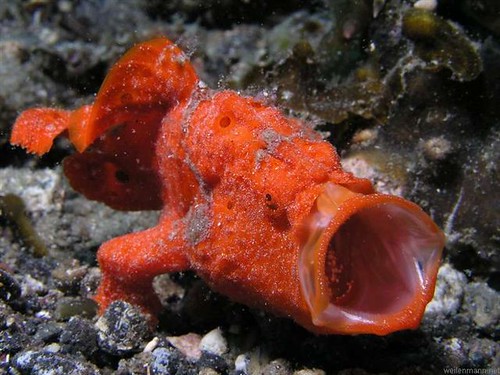
Frogfish are found in oceans throughout the world, and they take on a staggering variety of shapes and colors.